Standing at the Digital Crossroads

When I was the University Photographer at Eastern Kentucky University from 1994-2004, I was very active with the University Photographers Association of America. I was set to become the organization's president until I decided to leave the university and higher education. But I was the editor of UPAA's quarterly magazine The Contact Sheet for several years, even after leaving EKU. In January 2003, I wrote an article called Standing at the Digital Crossroads. I explored the unprecedented task of going from film to digital, and how those of us professional photographers at the time were pioneers because there had never been a medium change since the creation of photography in the early 1800s, and there still hasn't been since then. We truly were pioneers! Here is that article...
Standing at the Digital Crossroads
By Tim Webb
January 27, 2003
I was sitting in my rocking chair, minding my own business, when my granddaughter came running up to me and said, “Grandpa, what is this?" She handed me a small metallic cylinder with a plastic tongue sticking out of the end of it. I peered down the end of my nose with my hand stretched out, studying the numbers and writings on the side of the cylinder, and said, "Oh! I remember what this is. This used to be called film."
"Film? Grandpa, is that what they used back in the olden days?" This conversation isn't real. I don't have grandchildren, and everybody knows what film is, right? But get ready fellow photographers; this may very well be a conversation of the near future.
Digital Moderate
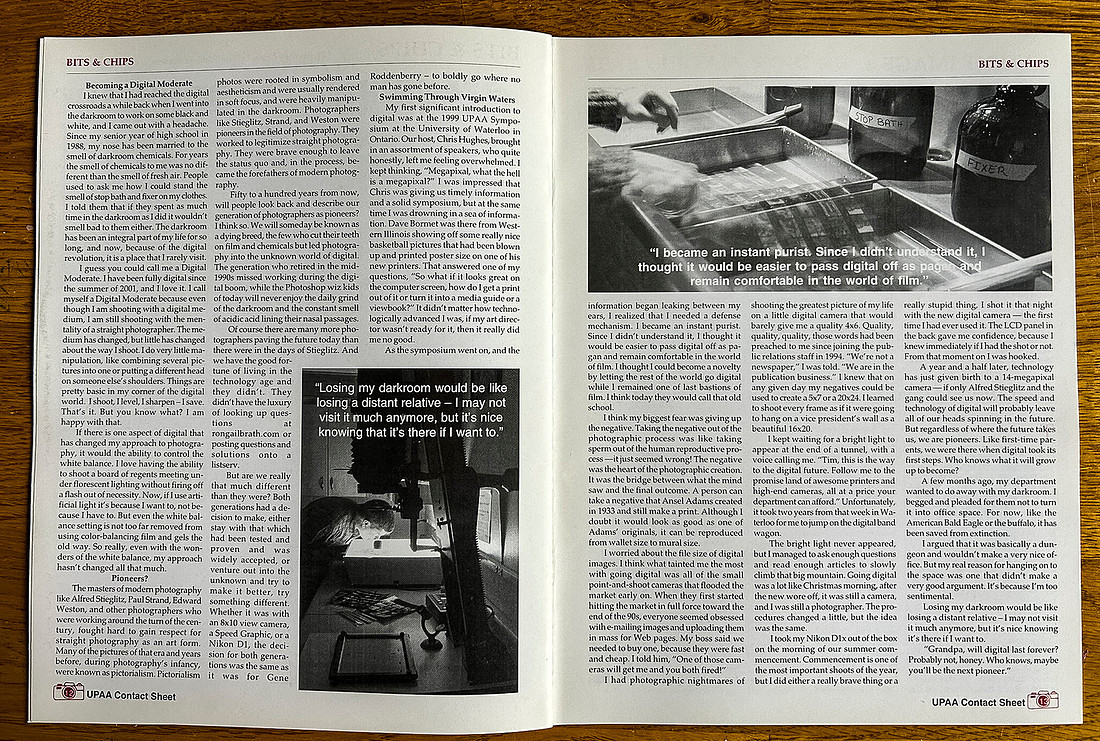
I knew that I had reached the digital crossroads a while back when I went into the darkroom to work on some black and white, and I came out with a headache. Since my senior year of high school in 1988, my nose has been married to the smell of darkroom chemicals. For years the smell of chemicals to me was no different than the smell of fresh air. People used to ask me how I could stand the smell of stop bath and fixer on my clothes. I told them that if they spent as much time in the darkroom as I did it wouldn't smell bad to them either. The darkroom has been an integral part of my life for so long, and now, because of the digital revolution, it is a place that I rarely visit.
I guess you could call me a digital moderate. I have been fully digital since the summer of 2001, and I love it. I call myself a digital moderate because even though I am shooting with a digital medium, I am still shooting with the mentality of a film photographer. The medium has changed, but little has changed about the way I shoot. I do very little manipulation, like combining several pictures into one or putting a different head on someone else's shoulders. Things are pretty basic in my corner of the digital world. I shoot. I level. I sharpen. I save.
That's it. But you know what? I am happy with that.
If there is one aspect of digital that has changed my approach to photography, it would the ability to control the white balance. I love having the ability to shoot a board of regents meeting under fluorescent lighting without firing off a flash out of necessity. Now, if l use artificial light it's because I want to, not because I have to. But even the white balance setting is not too far removed from using color-balancing film and gels the old way. So really, even with the wonders of the white balance, my approach hasn't changed all that much.
Are We Pioneers?
The masters of modern photography like Ansel Adams, Alfred Stieglitz, Paul Strand, Edward Weston, and other photographers who were working around the turn of the 20th century, fought hard to gain respect for straight photography as an art form.
Many of the pictures of that era and years before, during photography's infancy, were known as pictorialism. Pictorialism photos were rooted in symbolism and aestheticism and were usually rendered in soft focus, and were heavily manipulated in the darkroom. Photographers like Adams, Stieglitz, Strand, and Weston were pioneers in the field of photography. They worked to legitimize straight photography. They were brave enough to leave the status quo and, in the process, became the forefathers of modern photography.
Fifty to a hundred years from now, will people look back and describe our generation of photographers as pioneers? I think so. We will someday be known as the old breed, the few who cut their teeth on film and chemicals but also led photography into the unknown world of digital.
The generation who retired in the mid-1990s missed working during the digital boom, while the Photoshop whiz kids of today will never enjoy the daily grind of the darkroom and the constant smell of acidic acid lining their nasal passages. Of course there are many more photographers paving the future today than there were in the days of Stieglitz. And we have the good fortune of living in the technology age and they didn't. They didn't have the luxury of looking up questions at rongailbrath.com or posting questions and solutions onto a listserv.
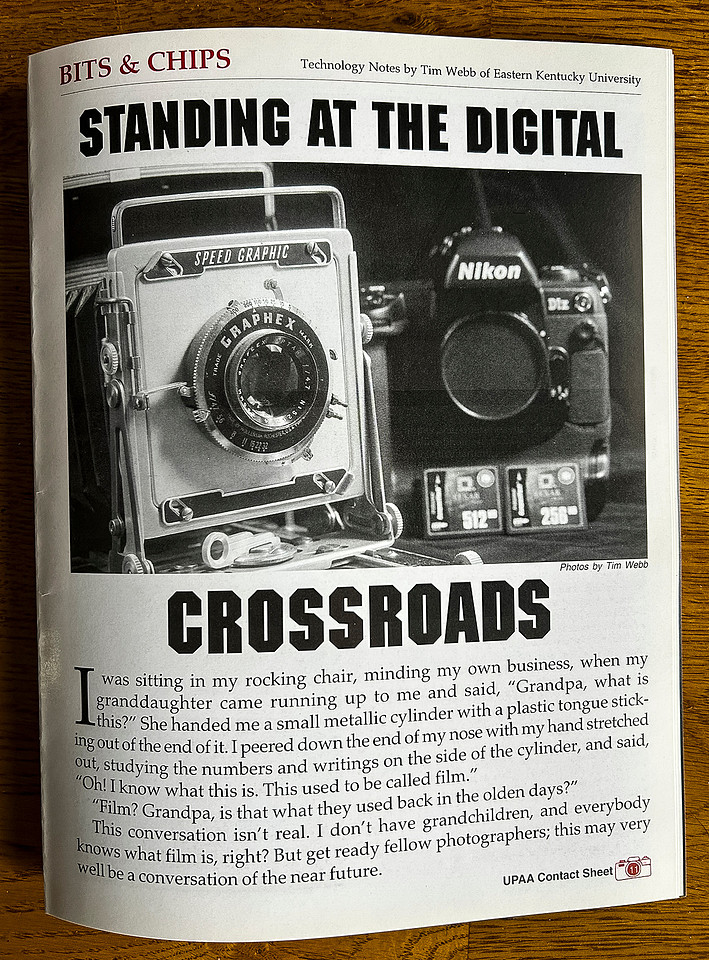
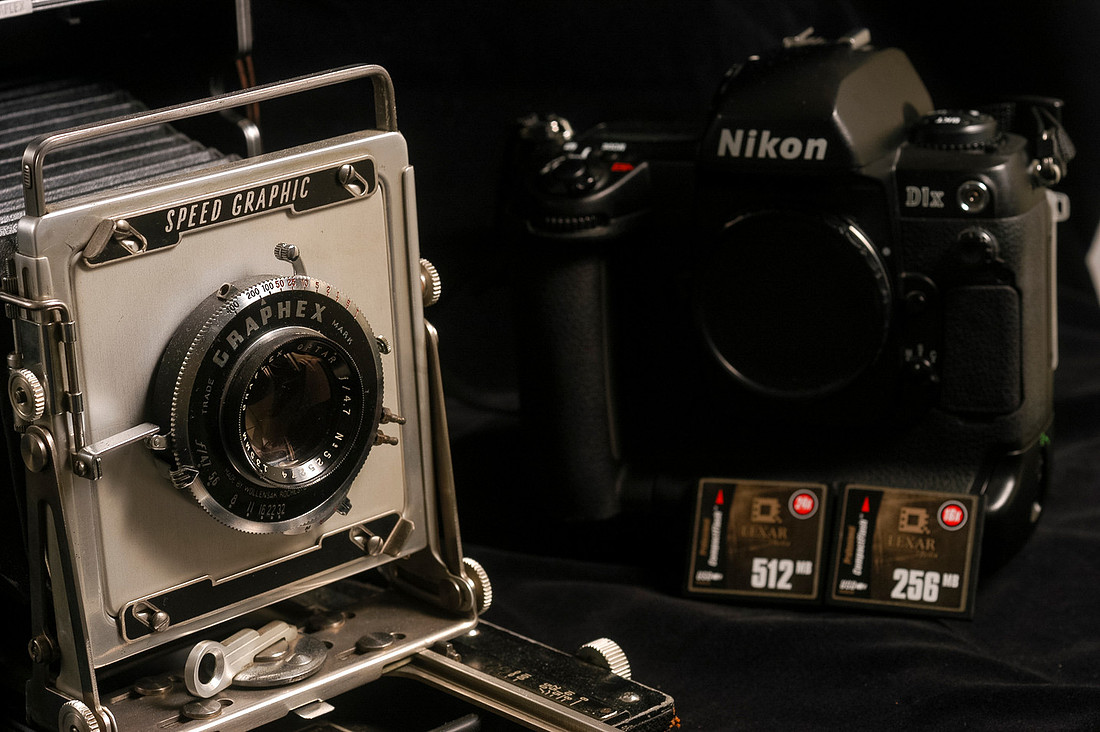
But are we that much different than they were? Both generations had a decision to make, either stay with that which had been tested and proven and was widely accepted or venture out into the unknown and try to make it better, try something different. Whether it was with an 8x10 view camera, a Speed Graphic, or a Nikon D1, the decision for both generations was the same as it was for Star Trek creator Gene Roddenberry - to boldly go where no man has gone before
Swimming Through Virgin Waters.
My first significant introduction to digital was at the 1999 UPAA Symposium at the University of Waterloo in Ontario. Our host, Chris Hughes, brought in an assortment of speakers, who quite honestly, left me feeling overwhelmed. I kept thinking, "Megapixel, what the hell is a megapixel?" I was impressed that Chris was giving us timely information and a solid symposium, but at the same time I was drowning in a sea of information.
Dave Bormet was there from the University of Western Illinois showing off some really nice basketball pictures that had been blown up and printed poster size on one of his new digital printers. That answered one of my questions, "So what if it looks great on the computer screen, how do I get a print out of it or turn it into a media guide or a viewbook?" It didn't matter how technologically advanced I was, if my art director wasn't ready for it, then it really did me no good.
As the symposium continued, I realized that I needed a defense mechanism. I became an instant purist. Since I didn't understand it, I thought it would be easier to pass digital off as pagan and remain comfortable in the world of film. I thought I could become a novelty by letting the rest of the world go digital while I remained one of last bastions of film. I think today they would call that old school.
I think my biggest fear was giving up the negative. Taking the negative out of the photographic process was like taking sperm cells out of the human reproductive process —it just seemed wrong! The negative was the heart of the photographic creation.
It was the bridge between what the mind saw and the final outcome. A person can take a negative that Ansel Adams created in 1933 and still make a print. Although I doubt it would look as good as one of Adams' originals, it can be reproduced from wallet size to mural size.
I worried about the file size of digital images. I think what tainted me the most with going digital was all of the small point-and-shoot cameras that flooded the market early on. When they first started hitting the market in full force toward the end of the 1990s, everyone seemed obsessed with e-mailing images and uploading them in mass for web pages. My boss said we needed to buy one, because they were fast and cheap. I told him, "One of those cameras will get me and you both fired!" I had photographic nightmares of taking the greatest picture of my life on a little digital camera that would barely give me a quality 4x6.
Quality, quality, quality. Those words had been preached to me since joining Eastern Kentucky University’s public relations staff in 1994. "We're not a newspaper," I was told. "We are in the publication business." I knew that on any given day my negatives could be used to create a 5x7 or a 20x24. I learned to shoot every frame as if it was going to hang on a vice president's wall as a beautiful 16x20.
I kept waiting for a bright light to appear at the end of a tunnel, with a voice calling me. "Tim, this is the way to the digital future. Follow me to high-end cameras, all at a price your department can afford." Unfortunately, it took two years from that week in Waterloo for me to jump on the digital band wagon.
The bright light never appeared but I managed to ask enough questions and read enough articles to slowly climb that big mountain. Going digital was a lot like Christmas morning, after the new wore off, it was still a camera, and I was still a photographer. The process changed, but the concept was the same.
I took my Nikon D1x out of the box on the morning of our summer commencement, August 3, 2001. Commencement is one of my most important shoots of the year, but I either did a really brave thing or a really stupid thing, I shot commencement that night with the new digital camera — the first time that I ever used it. The LCD panel in the back gave me confidence, because I knew immediately if I had the shot or not. From that moment on I was hooked.
A year and a half later, technology has just given birth to a 14-megapixal camera — if only Alfred Stieglitz and the gang could see us now. The speed and technology of digital will probably leave all of our heads spinning in the future. But regardless of where the future takes us, we are pioneers. Like first-time parents, we were there when digital took its infant steps. Who knows what it will grow up to become?
A few months ago, my department wanted to do away with my darkroom that Kodak designed when they built the Jones Building at Eastern Kentucky University in 1969. I begged and pleaded for them not to turn it into office space. For now, like the American Bald Eagle or the buffalo, it has been saved from extinction.
I argued that it was basically a dungeon and wouldn't make a very nice office. But my real reason for hanging on to the space was one that didn't make a very good argument. It's because I'm too sentimental. Losing my darkroom would be like losing a distant relative - I may not visit it much anymore, but it's nice knowing it's there if I want to.
"Grandpa, will digital last forever? Probably not, honey. Who knows, maybe you'll be the next pioneer."
-30-

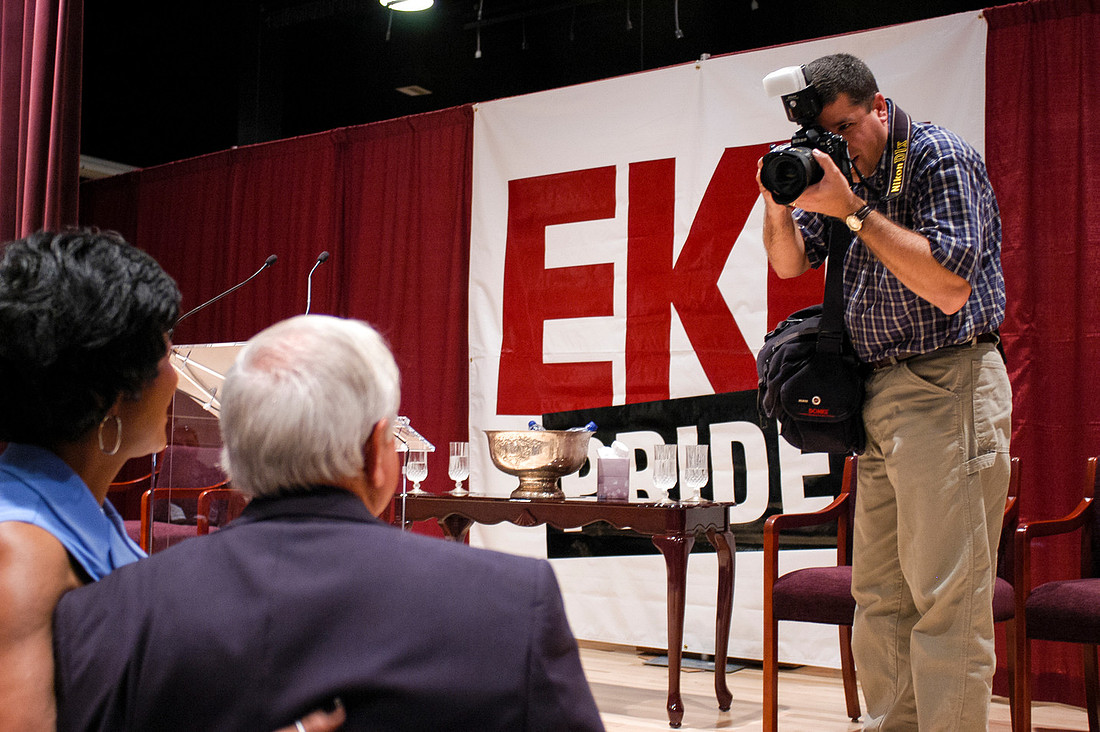 Most of my time as Eastern's University Photographer was spent in film and chemicals, but the last few years was spent in the infancy of digital. I'm seen here using my Nikon D1X as legendary football coach Roy Kidd announced his retirement in September 2002.
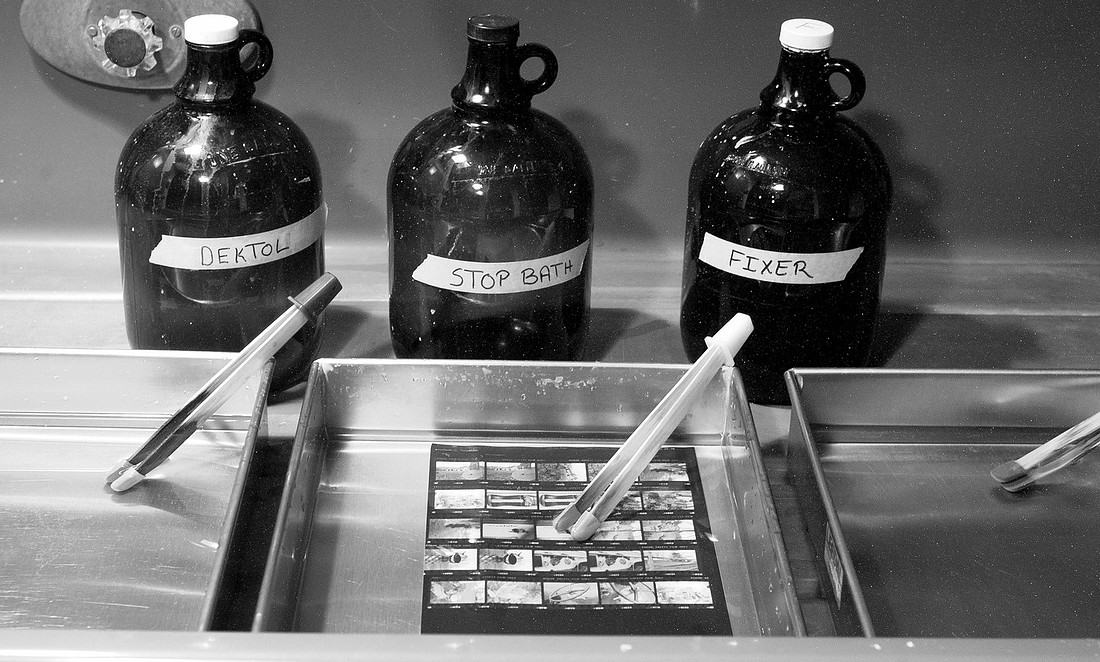
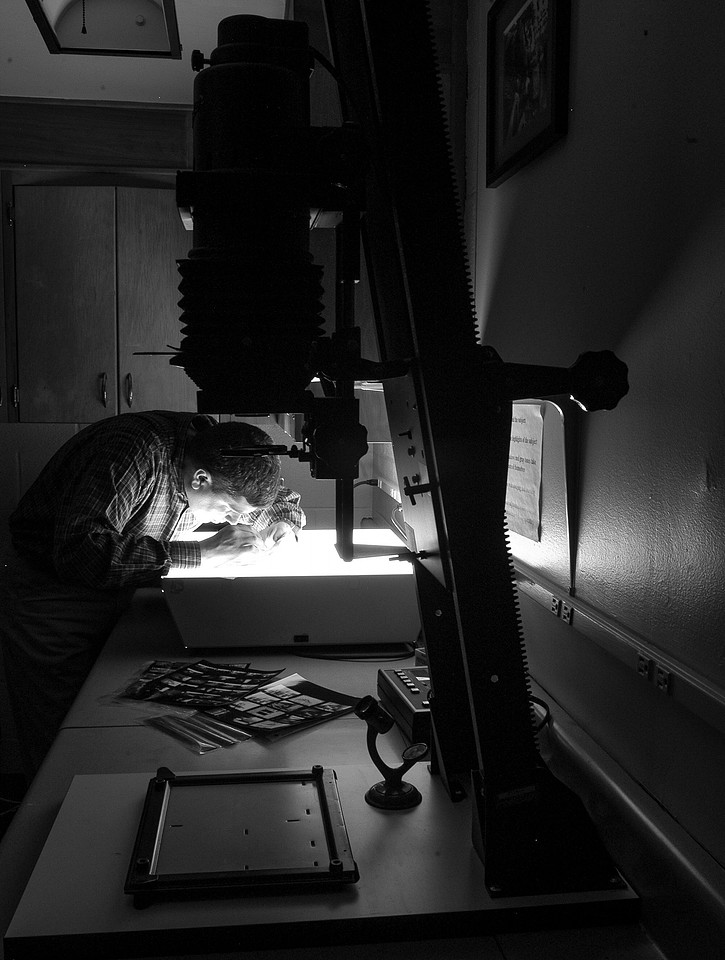
I thought I had died and gone to heaven when I first took the job at Eastern in 1994. Their darkroom was so big and so cool! It had been designed by Kodak when Eastern built the Jones Building in 1969.
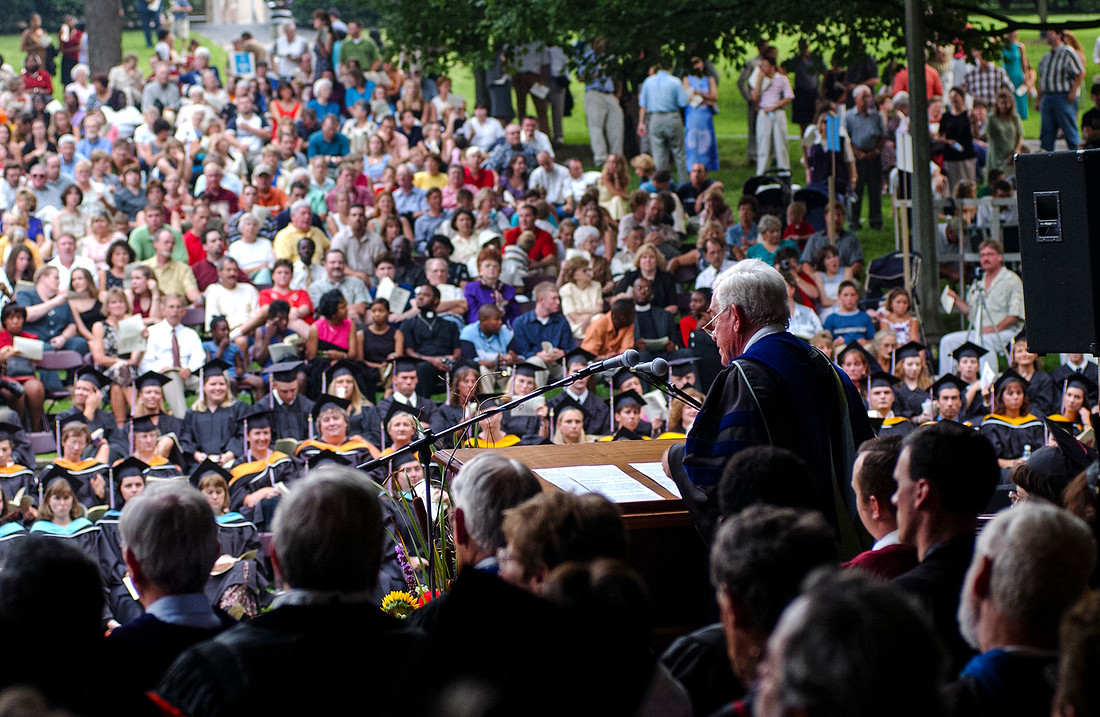
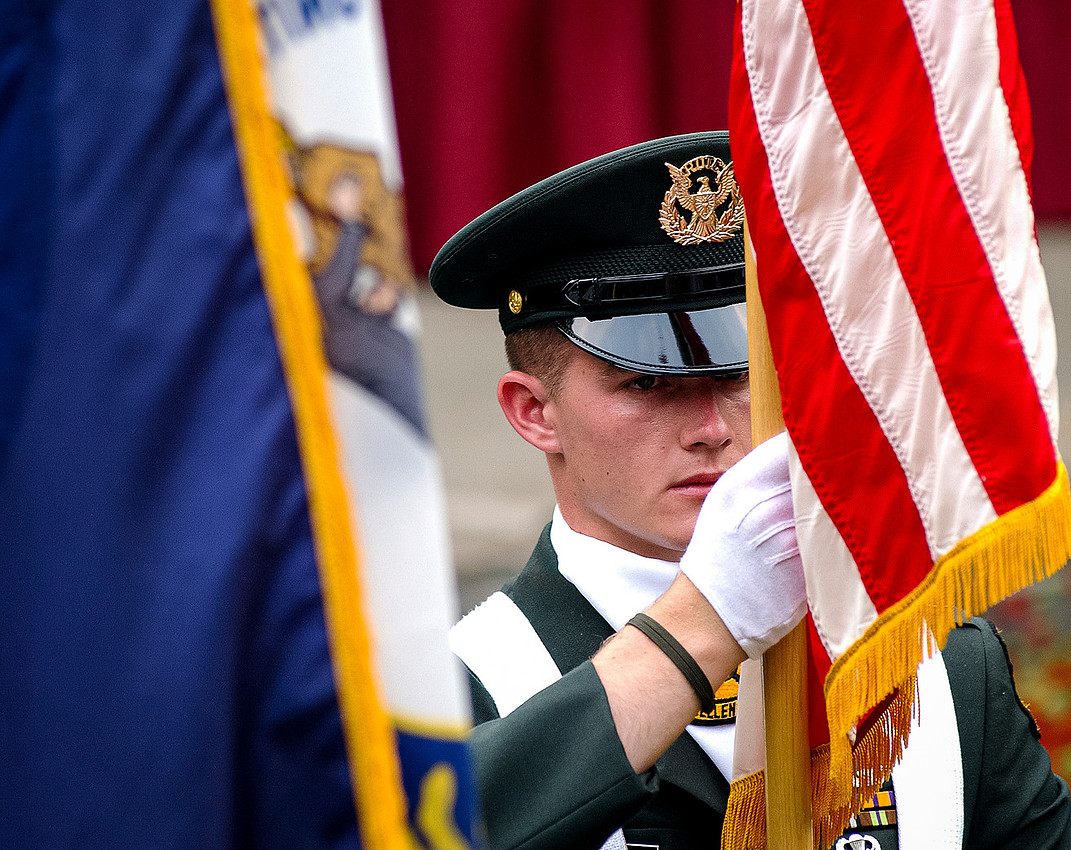
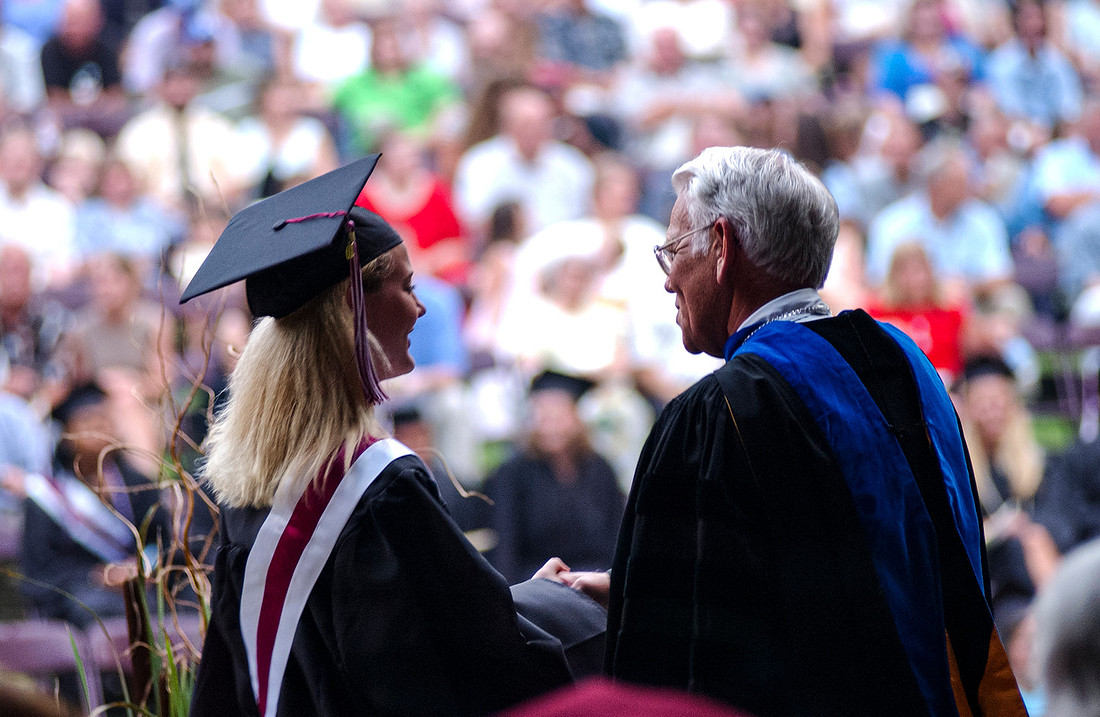
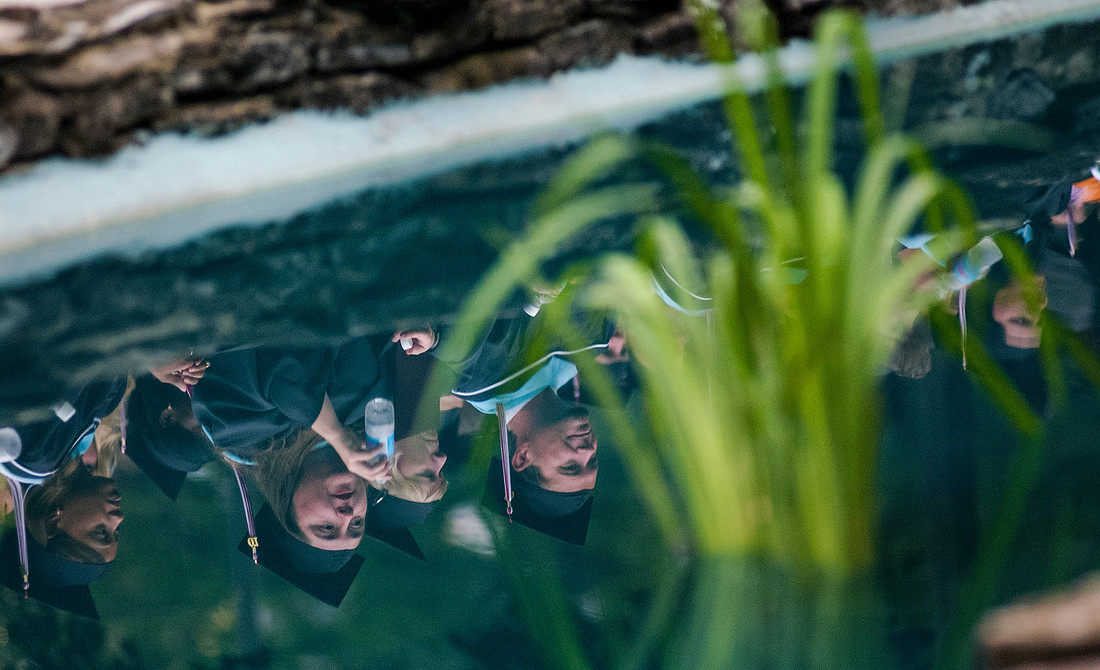 I either did a really stupid thing or a really brave thing by shooting summer commencement on August 3, 2001, the same day that I got my first professional level digital camera, before having time to try it out.